The 11 Best Bodyweight Workouts for Beginners

When you’re new to strength training, it’s easy to feel overwhelmed by equipment, gym setups, or complex routines. That’s why bodyweight workouts are one of the best places to start. A bodyweight workout uses your own body for resistance—no gear required—which makes it an accessible, zero-cost way to build strength, improve mobility, and learn proper form at your own pace.
For beginners who want an effective strength routine at home, bodyweight exercises help you master foundational movement patterns before adding weights. They also fit into any schedule, take up very little space, and require nothing more than your commitment and a few minutes of focused effort.
In this guide, you’ll learn why bodyweight workouts are ideal for beginners, how to structure a beginner bodyweight strength routine, and 11 of the best bodyweight exercises you can do anytime, anywhere—plus sample workouts to help you get started right away.
Why start with bodyweight workouts?

Bodyweight workouts are a safe, accessible, versatile place to start. First, doing strength exercises with just your body’s weight allows you to learn the correct form and practice the movement without making it any harder just yet. That helps you build the strength, familiarity, and confidence to one day lift heavier weight.
You’ll build strength, of course, but you’ll also improve your mobility as you practice moving your joints through their full range of motion. Bodyweight exercises are often very functional, meaning they mimic the movements of everyday life, such as helping you climb stairs or lift groceries with ease.
Bodyweight workouts also have fewer barriers to entry, which can throw off beginners who are just building a fitness routine. You can do a bodyweight workout just about anywhere, anytime, because you don’t need any equipment or much space. This also saves you time and money—another perk!
Last, bodyweight workouts are easy to modify depending on your needs. True beginners can do the simplest versions of these exercises. People returning from an injury can find accommodating versions of various movements. And others with varying abilities can modify as needed, too. No matter where you start, you can make certain bodyweight exercises more challenging or decide to add weights as you progress.
Before you jump into your first bodyweight workout for beginners, it helps to know how to build a balanced, full-body routine.
How to structure a beginner bodyweight workout

There are a number of different ways to structure strength workouts, but here’s one of the most straightforward for a bodyweight workout plan for beginners.
Start by planning to strength train all your major muscle groups at least twice a week. Make sure your strength workouts are at least 48 to 72 hours apart to give your muscles time to rest and recover, according to the National Academy of Sports Medicine.
Pick four to six exercises (the list below is a good place to start!), aiming for a mix of upper- and lower-body movements so you’re working your entire body.
Try to do 10 to 15 repetitions of each exercise, according to the American Council on Exercise. Rest for 30 to 90 seconds and, if you feel up for it, you can do a second (and even a third) set. If you don’t, move on to another exercise, and keep cycling through until you’ve completed all of your movements.
With a simple structure in place, the next step is choosing beginner-friendly bodyweight movements that train your entire body.
What’s your workout style?
Take our quiz and get a customized 14-day training program.
The 11 best beginner bodyweight exercises

The best bodyweight exercises work multiple joints and muscle groups at the same time, called compound movements. Here are some of our favorites:
Let’s dive in!
1. Squats
This lower-body exercise builds strength in your glutes and hamstrings (the backs of your upper legs), making it easier to stand up from sitting down.
How to do a squat:
Start standing with your feet slightly wider than your hips and turned slightly outward.
Bend your knees as your hips move back and down, as if you were about to sit down on a chair. Keep your chest lifted, your back straight, and your knees tracking over your toes.
Continue lowering down until your thighs are parallel with the ground, or as low as you can comfortably go while maintaining good form. Make sure your knees aren’t caving in but instead remain over your toes.
Press through your feet to return to standing.
Squeeze your glutes at the top of the movement.
Continue for your desired number of repetitions.
2. Forearm planks
A plank is technically a core exercise, but it also strengthens your arms, shoulders, and glutes.
How to do forearm planks:
Lie on your stomach on a yoga mat or other cushioned surface.
Prop yourself up on your toes and your forearms, with your elbows right under your shoulders.
Lift your body until you form a straight line from your heels to your hips to your head. Don’t let your hips sag or lift them too high.
Hold this position for your desired amount of time.
Tip: If you prefer, you can balance on your palms instead of your forearms, with your hands right under your shoulders. But if this position bothers your shoulders or wrists, stick to the forearm plank for now.
3. Step-ups
Another lower-body exercise, the step-up strengthens your legs and glutes and trains your balance.
How to do step-ups:
Stand in front of a staircase.
Step your right foot up onto a stair.
Press through your right heel to lift your whole body up and stand fully on the stair.
Step your left foot down onto the floor.
Return your right foot to the floor.
Continue for your desired number of reps. Then switch sides: Repeat for the same number of reps stepping up with your left foot first.
4. Wall push-ups
If a full push-up feels challenging, try this beginner-friendly modification that strengthens your arms, shoulders, and core.
How to do wall push-ups:
Start standing about two feet from a wall. Place your hands on the wall at chest height and just outside your shoulders and lean into your hands so your body forms a diagonal line. This is the starting position.
Bend your elbows at about 45-degree angles from your torso as you lower your chest toward the wall, leaning into your hands.
When you’re as close as you can get to the wall, press through your palms to push your body back to the starting position.
Continue for your desired number of reps.
Tip: As you build strength, up the ante with an incline push-up. Place your hands on a counter or couch to do your push-ups. And when you’re ready, progress to a full push-up with your palms on the floor.
5. Glute bridges
To isolate and strengthen your glutes and hamstrings, try this simple bridge exercise. Bonus: It also works your core!
How to do glute bridges:
Start lying down on your back on a mat or other cushioned surface.
Bend your knees and plant your feet about six inches from your butt. Your arms can be flat by your sides.
Engage your core by tilting your pelvis slightly forward.
Press through your heels to lift your hips until your body forms a diagonal line from your knees to your hips to your shoulders. Pause here briefly.
Slowly and with control, lower your hips back down.
Continue for your desired number of reps.
6. Alternating reverse lunges
Reverse lunges can be a little gentler on the knees for beginners or anyone with a history of knee pain. This move builds lower-body and core strength, plus it challenges your balance.
How to do alternating reverse lunges:
Start standing tall with your feet planted shoulder-width apart.
Step your right foot about two feet behind you.
Bend both knees as you lower your body toward the floor.
Continue lowering until both knees form 90-degree angles. Your right knee should almost touch the ground. Make sure your left knee stays over your left foot.
Press through the heel of your left foot to lift back up, and bring your right foot back to the starting position.
Repeat on the other side, stepping back with your left foot. That’s one rep.
Continue alternating sides for your desired number of reps.
7. Lateral raises
This bodyweight exercise works your arms and shoulders, as well as your core—as long as you make sure you’re not swinging your arms up using momentum.
How to do lateral raises:
Start standing tall with your feet planted shoulder-width apart and your arms by your sides, palms facing toward each other.
With a slight bend in your elbows, lift your arms straight out to your sides until they’re about shoulder level.
Pause here briefly.
Slowly and with control, lower your arms back down to your sides.
Continue for your desired number of reps.
8. Triceps dips
Your triceps are the muscles on the backs of your upper arms. This arm exercise also engages your chest and shoulder muscles.
How to do triceps dips:
Sit on a sturdy chair with your hands by your hips, fingers hanging over the edge.
Plant your feet in front of you with your knees bent and scoot your glutes off the seat, supporting yourself on your arms.
Bend your elbows behind you to lower your hips toward the floor.
With your chest up and spine long, continue lowering until your upper arms are parallel to the floor.
Press through your palms to lift yourself back up.
Continue for your desired number of reps.
9. Lateral lunges
It’s important to move in different planes of motion to mimic the movements of everyday life. This lower-body exercise builds glute and leg strength moving sideways (aka laterally).
How to do lateral lunges:
Start standing tall with your feet planted hip-width apart.
Take a large step with your right foot out to the right.
Hinge at the hips and lower into a lunge until your right knee forms a 90-degree angle. Make sure your knee stays over your toes.
Press through your right foot to return to the starting position.
Repeat for your desired number of reps. Then switch sides: Repeat for the same number of reps stepping out with your left foot to the left.
10. Side planks
Target the oblique muscles on the sides of your torso with this plank variation.
How to do side planks:
Lie on your right side on a mat or other cushioned surface with your left foot stacked on top of your right foot.
Brace your core and glutes and press up into a side plank, balancing on the outside of your right foot and your right palm or forearm.
Squeezing your glutes and core, hold here for your desired amount of time.
Lower back down to your mat, then repeat on the other side.
11. Calf raises
Your calf muscles, on the backs of your lower legs, help you push off when walking or running. This calf exercise also helps with ankle mobility.
How to do calf raises:
Stand near a wall or a sturdy piece of furniture to hold on to for balance if needed.
Keeping your legs straight, slowly lift your heels off the floor so you’re balancing on your toes.
Hold at the top briefly.
Slowly and with control, lower your heels back to the floor.
Repeat for your desired number of reps.
Sample beginner-friendly bodyweight workout routines

Ready to put it all together? Here’s how to craft a total-body strength training workout that’s perfect for beginners and uses only your body weight, no matter how much time you have!
15-minute bodyweight workout routine for beginners
Warm-up
90 seconds walking or jogging in place
90 seconds dynamic exercises like leg swings, arm circles, and torso twists
Workout: Repeat for a total of 3 rounds
30 seconds of squats
30 seconds rest
30 seconds of forearm planks
30 seconds rest
30 seconds of calf raises
30 seconds rest
30 seconds lateral raises
30 seconds rest
20-minute bodyweight workout routine for beginners
Warm-up
3 minutes walking or jogging in place
2 minutes dynamic exercises like leg swings, arm circles, and torso twists
Workout: Repeat for a total of 3 rounds
10 glute bridges
Rest 30 seconds
10 push-ups
Rest 30 seconds
10 lateral lunges per side
Rest 30 seconds
10 triceps dips
Rest 60 seconds
30-minute bodyweight workout routine for beginners
Warm-up
3 minutes walking or jogging in place
2 minutes dynamic exercises like leg swings, arm circles, and torso twists
Workout: Repeat for a total of 3 rounds
10 step ups per side
Rest 30 to 60 seconds
30 seconds of side plank per side
Rest 30 to 60 seconds
10 alternating reverse lunges
Rest 30 to 60 seconds
10 triceps dips
Rest 30 to 60 seconds
10 calf raises
Rest 30 to 60 seconds
10 lateral raises
Rest 30 to 60 seconds
Over time, you’ll get the hang of it—and with some dedicated time and effort, you’ll start to see encouraging results.
Looking for more guidance?

Hydrow offers guided strength training workouts for every fitness level, all led by world-class Athletes who coach you through each movement and help you stay consistent. Additionally, our rowing workouts target 86% of your muscles with every stroke, delivering full-body training and real results.
Explore Hydrow’s strength workouts and see how far you can go.
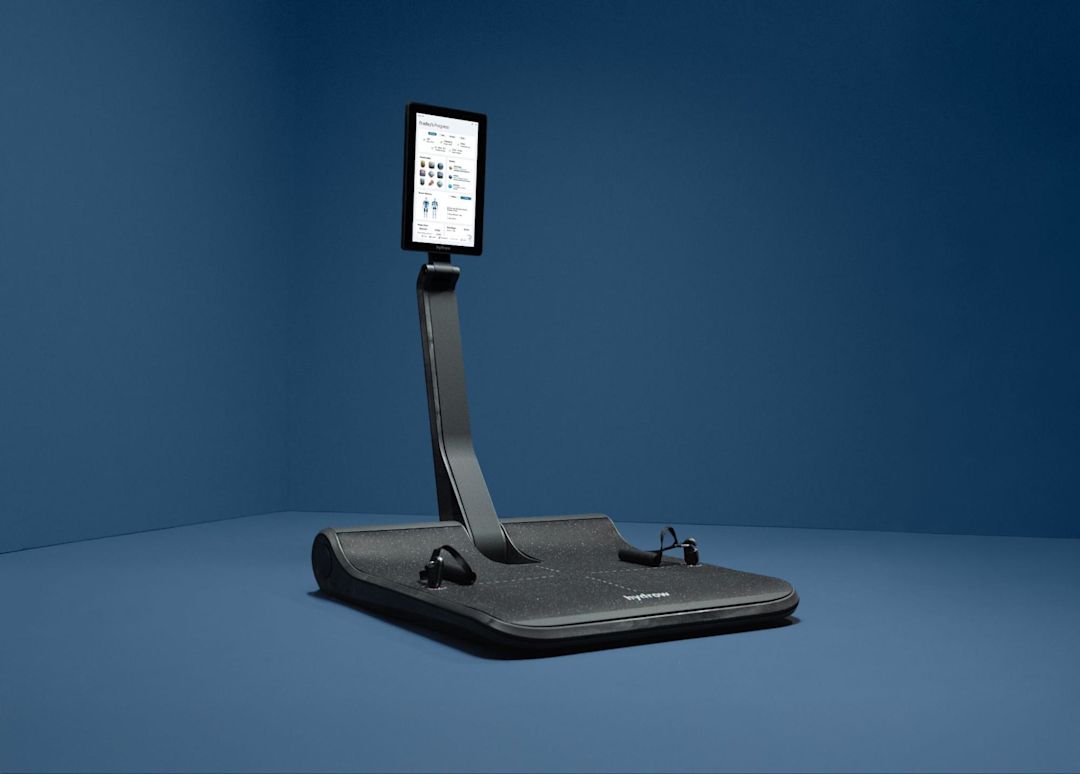
Bring LYQUID home
Preorder now and be ready to go when LYQUID is here.