How the Hydrow Wave Became a Feat of Engineering and Design
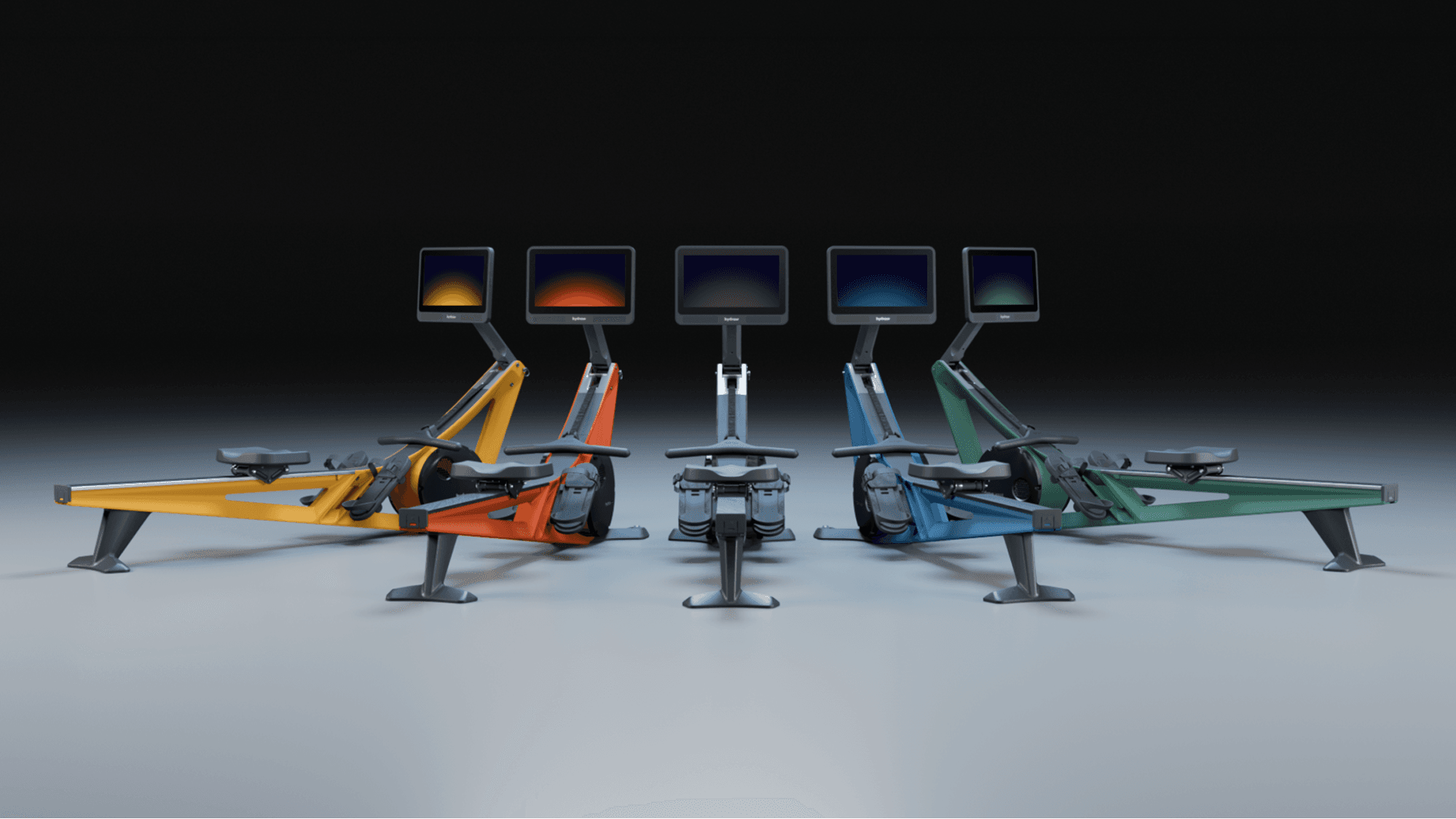
When we first set out to create our Wave rower, our mission wasn’t simply to make a smaller rower. The goal was far more ambitious: to preserve the premium Hydrow experience our Members loved while completely reimagining how a compact connected rowing machine could fit into modern life.
The result was Hydrow Wave, a machine that is lighter, smaller, easier to move, and easier to ship — yet still unmistakably Hydrow. Behind that simplicity is years of engineering iteration, industrial design exploration, and creative problem-solving.
And what makes Wave remarkable isn’t just what changed — it’s what didn’t.
Wave delivers the same immersive rowing experience, smooth pull, and connected fitness ecosystem as Hydrow’s larger machines, all within a dramatically more compact footprint.
And achieving that required the team to redesign nearly everything from the inside out.
Designing for real life
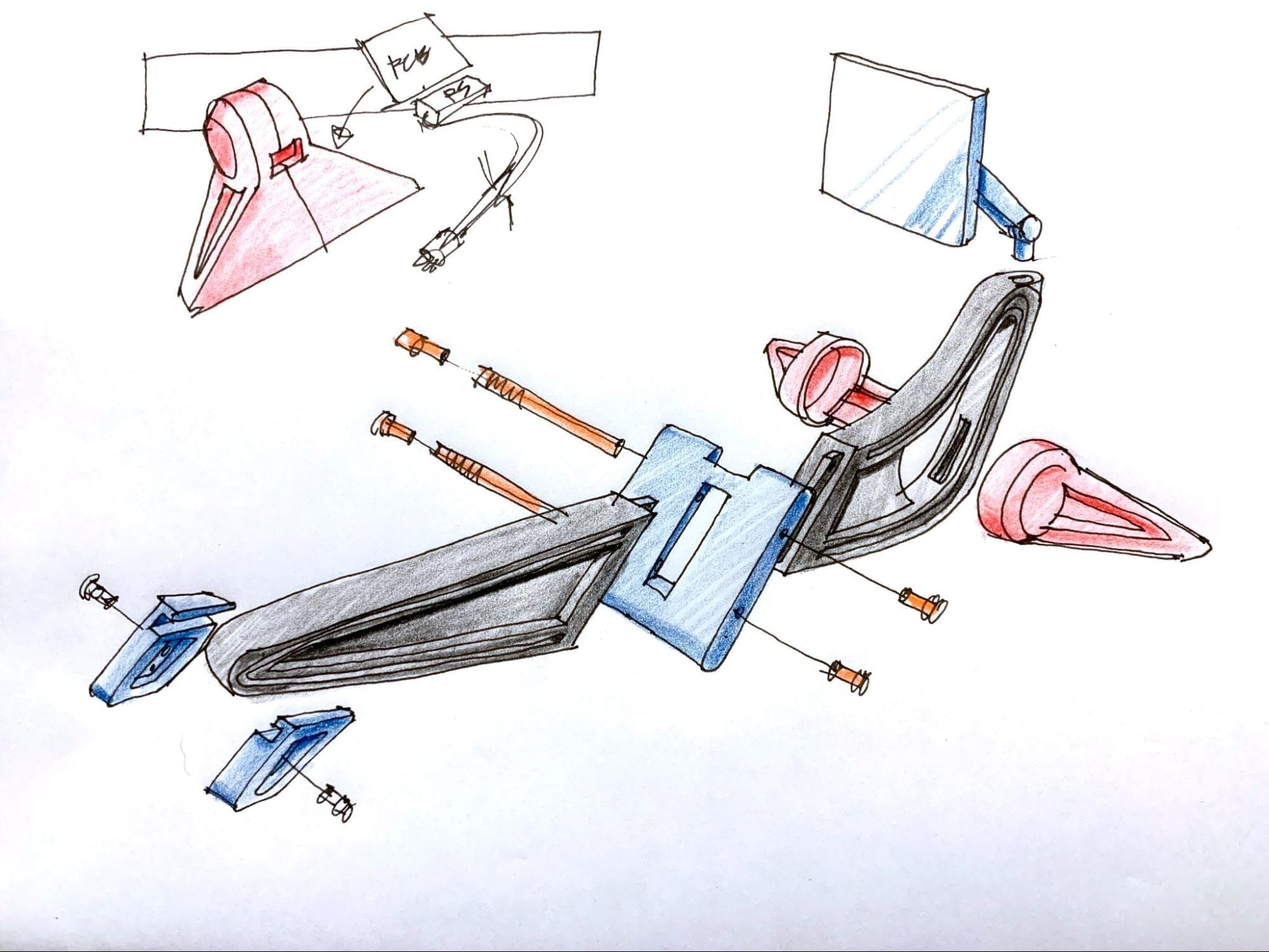
The idea for Wave emerged around 2020, shortly after the success of Origin, our original rower. The team recognized an opportunity: Many people wanted a premium rowing experience but lived in apartments, smaller homes, or spaces where a traditional connected rower simply wasn’t practical.
That realization shaped every decision that followed.
The goal was to build a machine that could ship easily, navigate staircases and tight apartments and be assembled easily at home, while still maintaining the premium feel and performance of its predecessor.
These constraints forced the team to rethink everything about the product.
Related blog: Comparing Hydrow Arc, Hydrow Origin, and Hydrow Wave: What Are the Differences, and Which Is Right for You?
Reengineering the entire machine
On Origin, the electrical and mechanical systems span much of the machine’s interior. Wave doesn’t have that luxury.
Instead, engineers had to compress nearly everything—the drive mechanisms, electronics, gearing systems, and electromagnetic brake—into a compact front drum.
The challenge was as much about geometry as engineering.
The resistance system itself had to be redesigned and compacted in ways suppliers weren’t accustomed to manufacturing. At the same time, the team still required the machine to feel smooth, quiet, and stable during intense workouts.
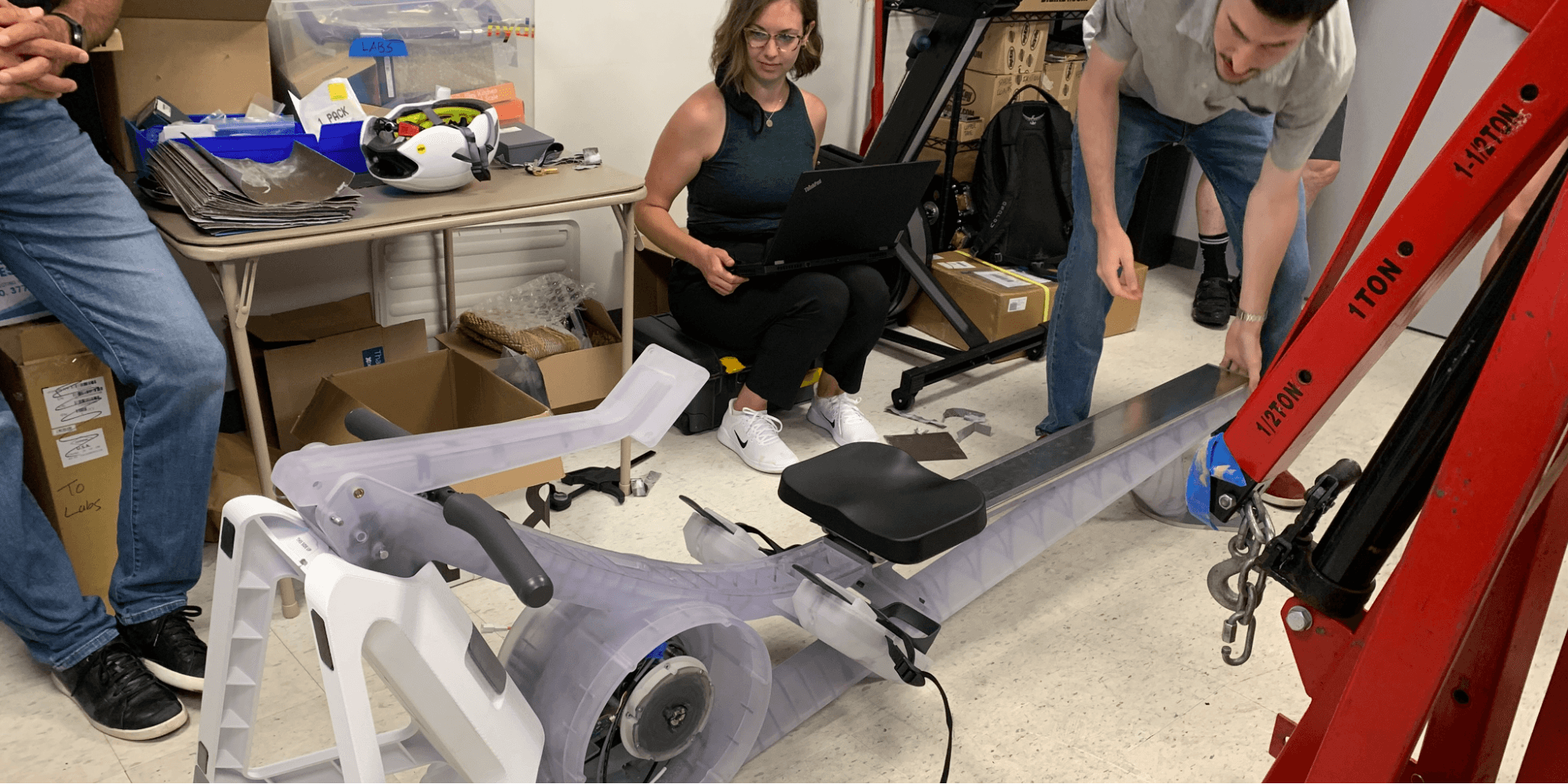
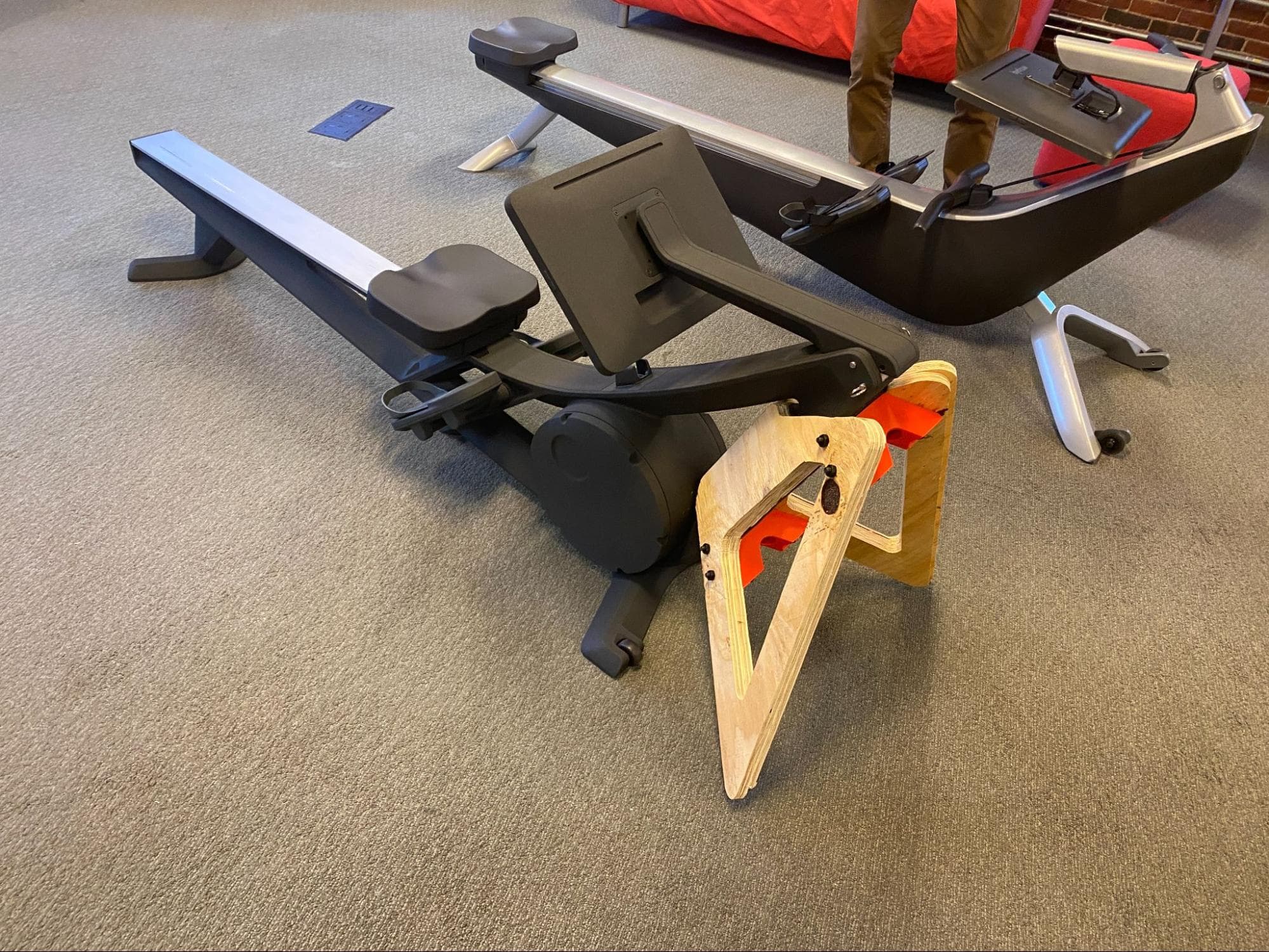
Early prototypes leaned heavily into plastic construction, including plastic front feet and console arms. But testing revealed these components introduced too much movement. Metal reinforcements were added in key areas to stabilize the experience without compromising portability.
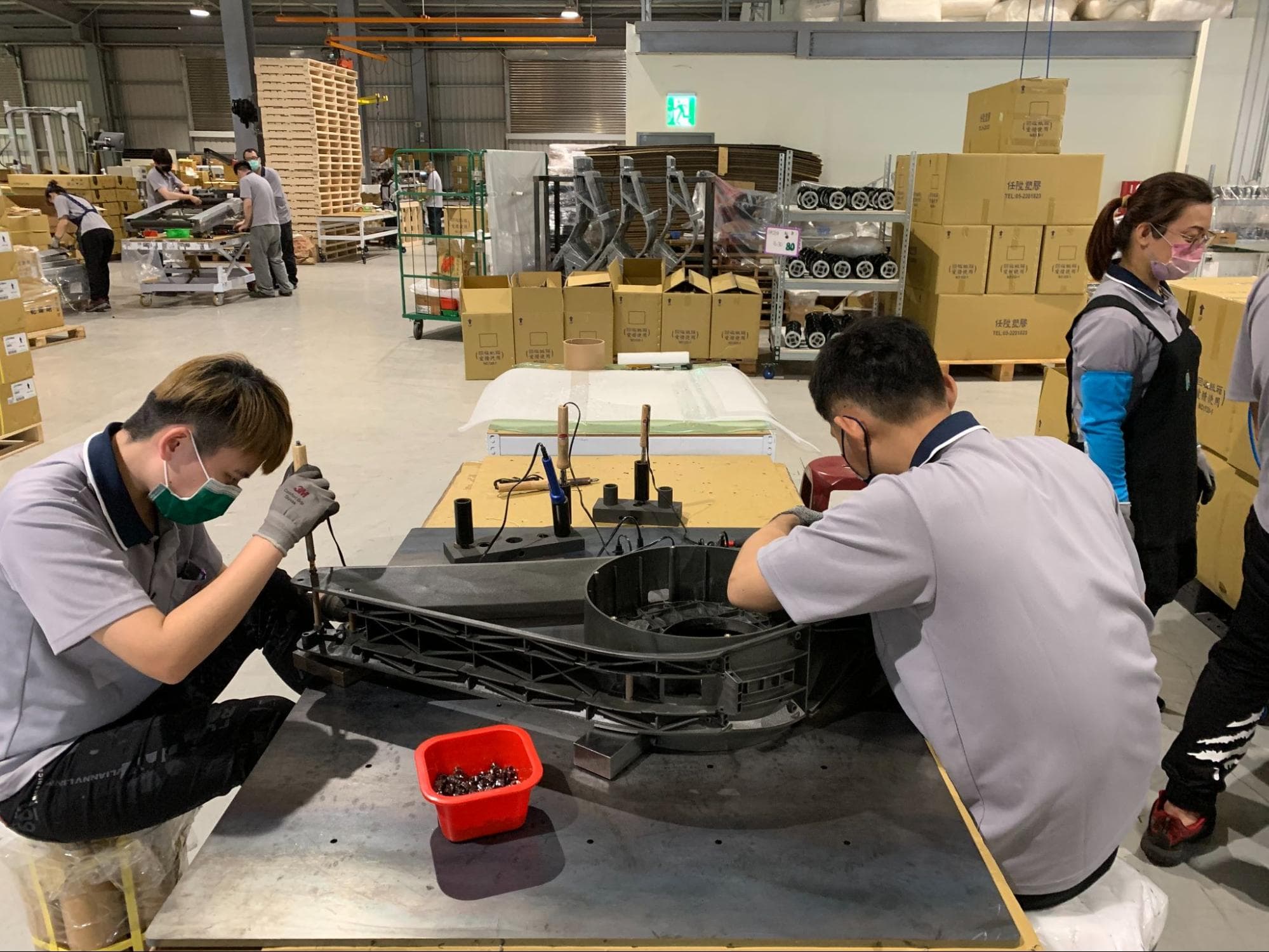
Additionally, because the mechanical and electronic systems are packed into one enclosed space, heat management becomes a major consideration. Unlike the original rower, which relied more heavily on metal structures, Wave’s largely polymer construction required materials capable of handling sustained heat without warping or distortion.
The resulting portability fundamentally changes the ownership experience. Wave is easier to move between rooms, easier to fit into apartments, maneuverable to store upright, and practical enough for some owners to transport in their cars for vacations or visits with family.
Wondering if a Hydrow rowing machine is right for you? Get answers in our FAQ guide.
A new approach to fitness design
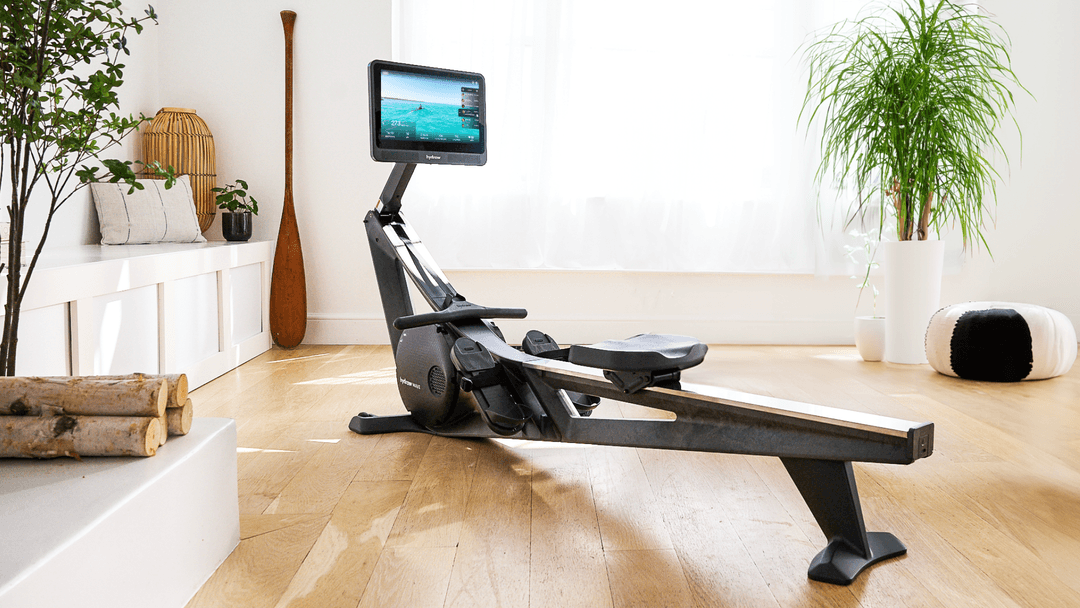
Wave’s engineering breakthroughs are only part of the story. Visually, the machine represents a major shift in fitness equipment design.
Rather than hiding the machine’s construction, Hydrow’s design team leaned into it.
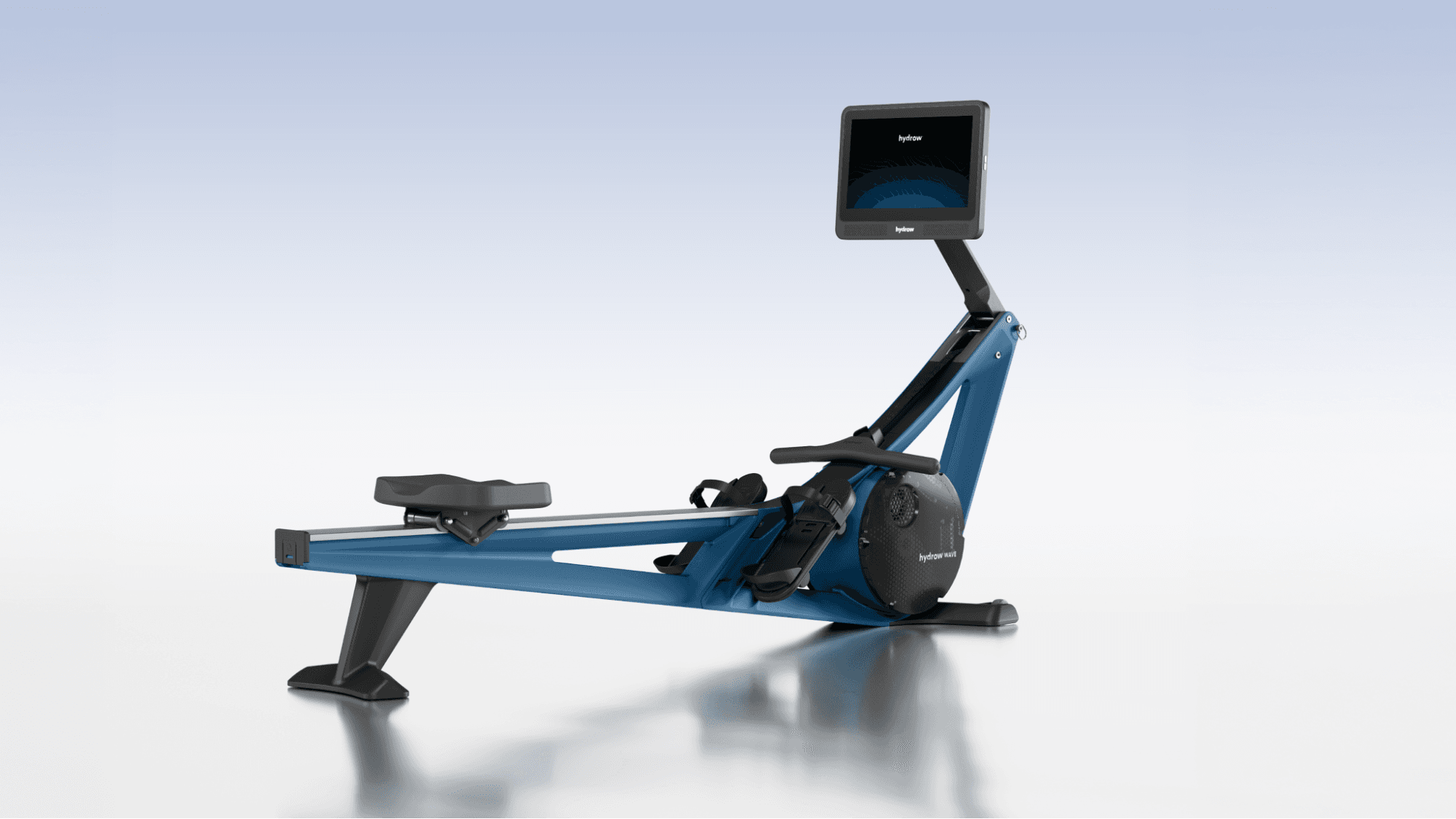
Inspired by architecture, bridges, bicycles, and modern furniture, the team embraced an industrial aesthetic centered around the machine’s glass-filled polymer structure.
The visible glass fibers, hollowed center frame, and exposed functional elements are intentional parts of the product’s identity. Lightweight translucent covers protect the machine while still allowing users to see the engineering underneath, including the electromagnetic brake system itself.
The team also made a bold decision to introduce multiple color options at a time when most fitness equipment was dominated by black and silver finishes.
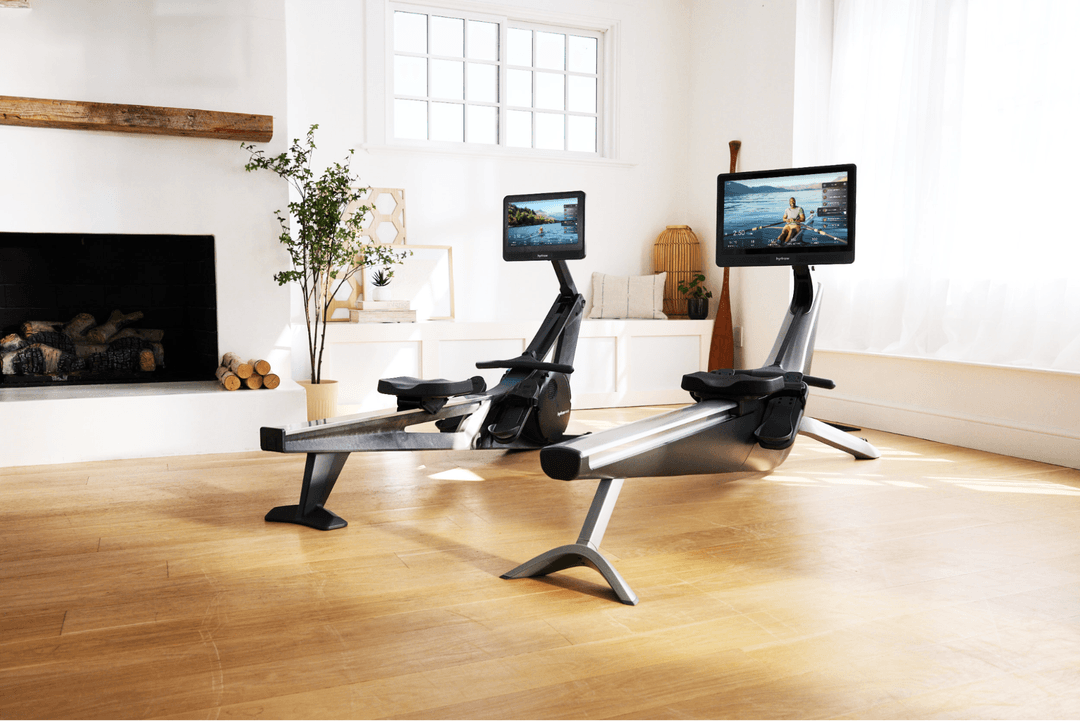
The idea was to create a machine that didn’t ask to be hidden away in a basement gym. Instead, Wave was designed to feel intentional within the home—more like a piece of modern furniture or art than traditional workout equipment.
Cardio and strength, combined
Burn calories and build muscle with steady, natural movements.
Delivering the Hydrow experience in a smaller package
Perhaps the most impressive part of Wave’s story is that despite all the downsizing, the team refused to sacrifice the rowing experience itself.
Wave incorporates our patented electromagnetic resistance system and digital controls—features often absent from smaller, lower-cost rowers.
The redesign even produced an unexpected benefit: the machine became quieter. Engineers found that the compact drum-based architecture naturally reduces noise compared to more traditional flywheel and chain systems.
Next to many compact rowers on the market, the difference is significant. As the engineering team explains, many smaller machines sacrifice feel, stability, content experience, or overall quality in pursuit of size. Wave proves that compact doesn’t have to mean compromised.
More than a smaller rower
Wave stands as an example of what happens when engineering and design work together to solve real-world problems.
It’s not enough for the machine to simply fit in a smaller box. It has to feel premium. It has to row beautifully. It has to survive shipping, fit into apartments, look stunning in homes, and deliver the totally immersive experience Hydrow is known for.
That balancing act is what makes Wave remarkable.
It’s not just a smaller Hydrow. It’s a complete reinvention of what a connected rower can be.
Real strength keeps moving
Learn how working out with Hydrow can help support a fuller, more active life.