Beginner Chest Workouts: 5 Exercises to Build Strength and Confidence
A sculpted chest supports more than just a nice, aesthetic look. Strong chest muscles help with posture, balance, and shoulder stability and can support everyday activities like pushing open doors, carrying heavy items, pushing objects, and getting up off the floor.
If you’re just getting started with training your chest muscles, you’ve come to the right place! Here, we’ll outline everything you need to know about beginner chest workouts, including:
Let’s dive in!
Why train your chest?
Building strong chest (pectoralis) muscles helps you stand tall and maintain good posture. Paired with your shoulder muscles, a strong chest can protect your shoulders from injuries and overuse, keeping you moving safely.
Strengthening your chest doesn’t just improve function—it also contributes to a balanced, athletic physique. Whether you’re hitting the pool for swimming, swinging on the pickleball court, or just tackling everyday tasks, powerful chest muscles make it easier and more efficient. Bonus: Increasing muscle mass also boosts your metabolism and calorie burn—double win!
Tips for chest workout beginners
If you’re new to chest training, starting with the right approach can help you build strength safely and effectively. Use these tips to make the most of your workouts:
Engage supporting muscles: Recruit supporting muscle groups during your workout, like triceps (the back of your arm) and deltoids (shoulders). These muscles work with your chest to help with pushing motions and overall strength, so incorporating exercises like a chest press that also work these muscles will help build chest strength.
Choose the right weight: Chest muscles are some of the larger muscles in the body, so they can handle a good amount of weight. Start with a weight that is challenging but can still be lifted safely for 8–10 reps.
Prioritize proper form: Beginner exercisers may benefit from guidance from a fitness professional to make sure their form is good and they’re completing exercises safely. For instance, Hydrow has an extensive library of expert-guided home workouts to guide you through doing chest exercises safely.
The 5 best chest exercises for beginners
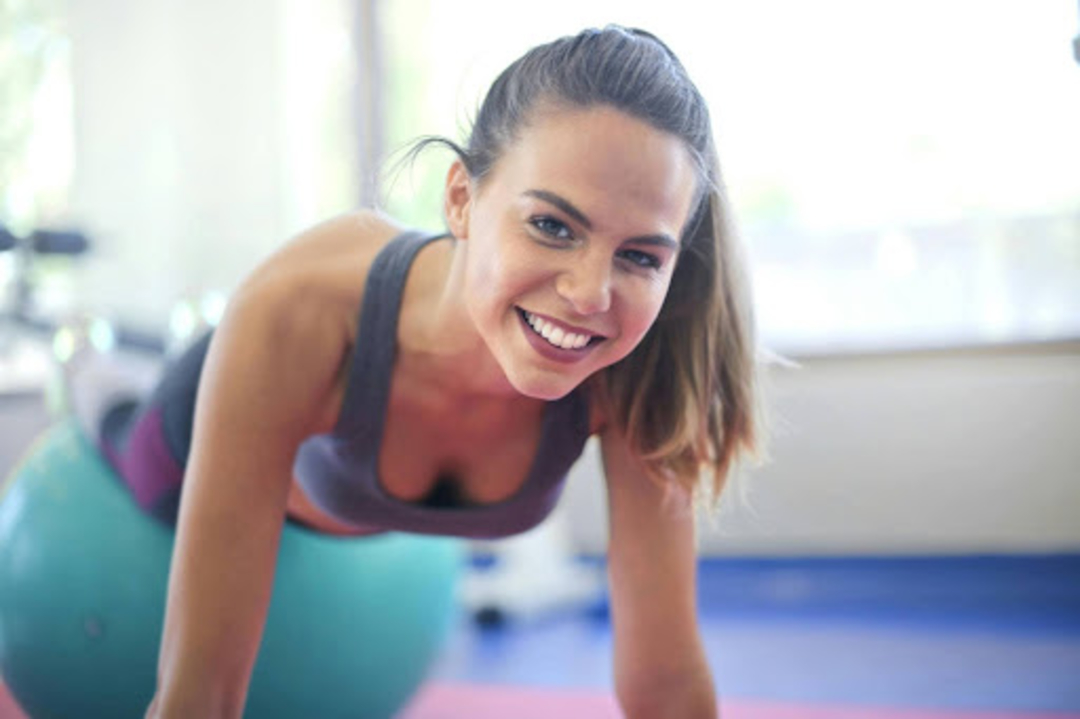
If you’re just beginning your strength training journey, here are five fantastic exercises to include in your workouts:
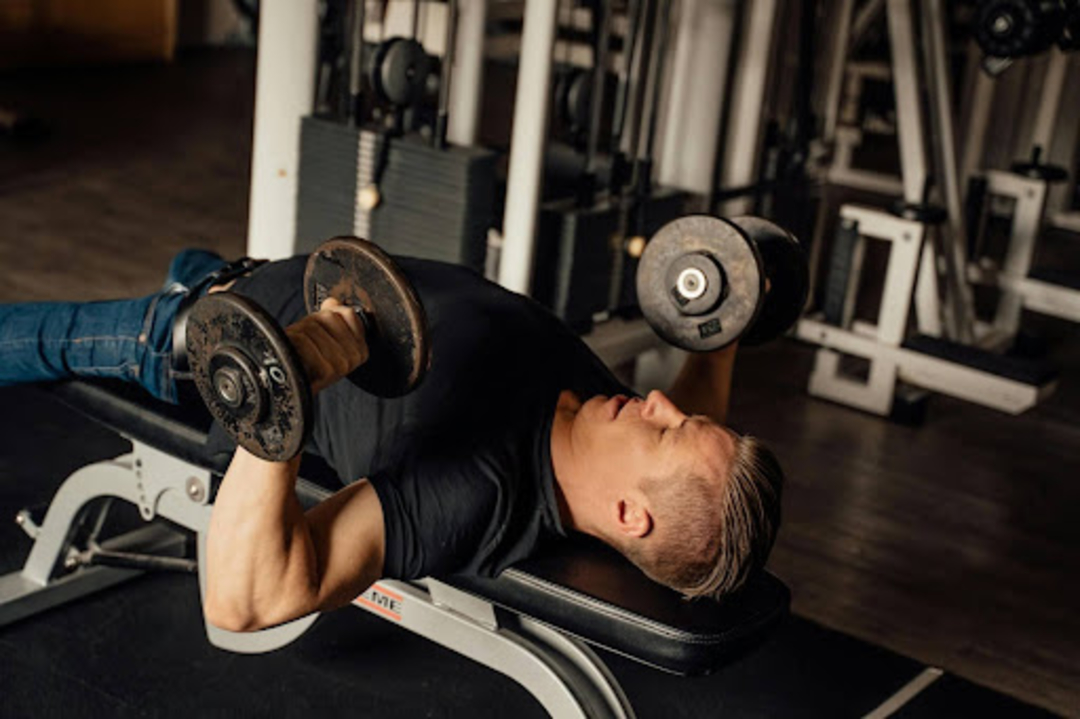
1. Chest press
This exercise is a classic for a reason. It hits all the muscle groups you need for strong pushing movements, including your triceps and deltoids.
How to do a chest press:
Lie on your back on the floor or a bench, with your knees bent and feet flat.
Hold dumbbells aligned with the midline of the chest, elbows bent, and palms facing away.
Press dumbbells up and slightly to the middle.
Pause, lower with control, and repeat.
2. Dumbbell fly
This is a single-joint exercise that’s great for getting focused work on the chest muscles.
How to do a dumbbell fly:
Lie on your back on the floor or a bench, with your knees bent and feet flat.
Hold dumbbells straight up over your chest with palms facing each other.
With a slight bend in your elbows, lower the weights out to your sides with control until your arms are about parallel to the floor.
Pause, lift back to the starting position, and repeat.
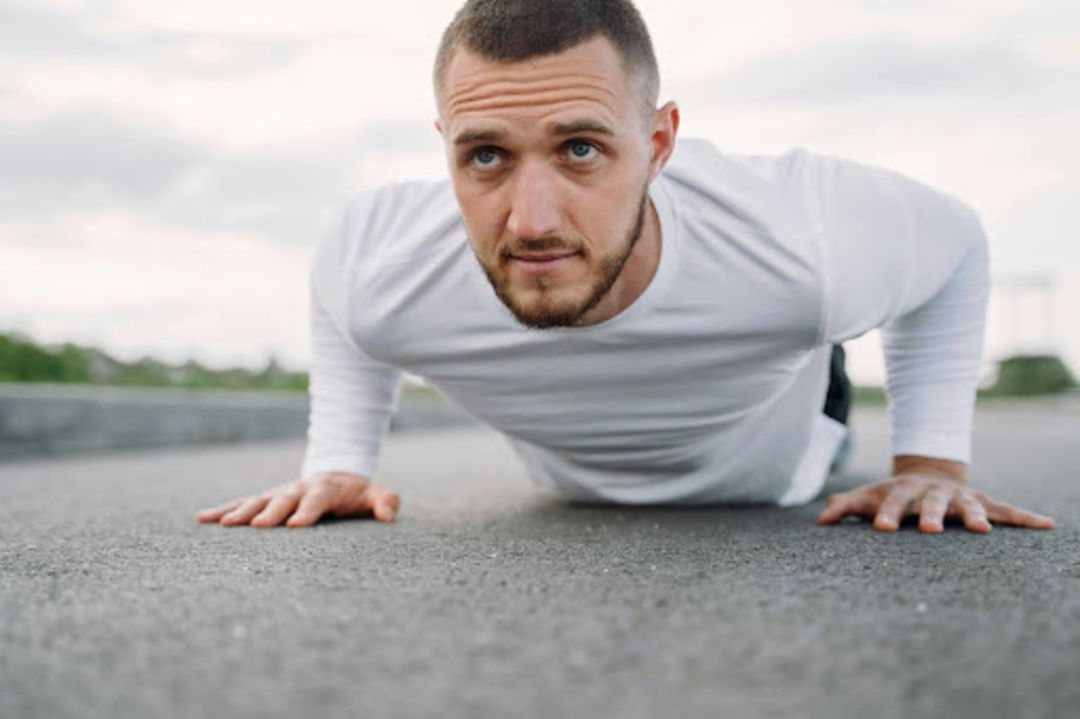
3. Incline push-up
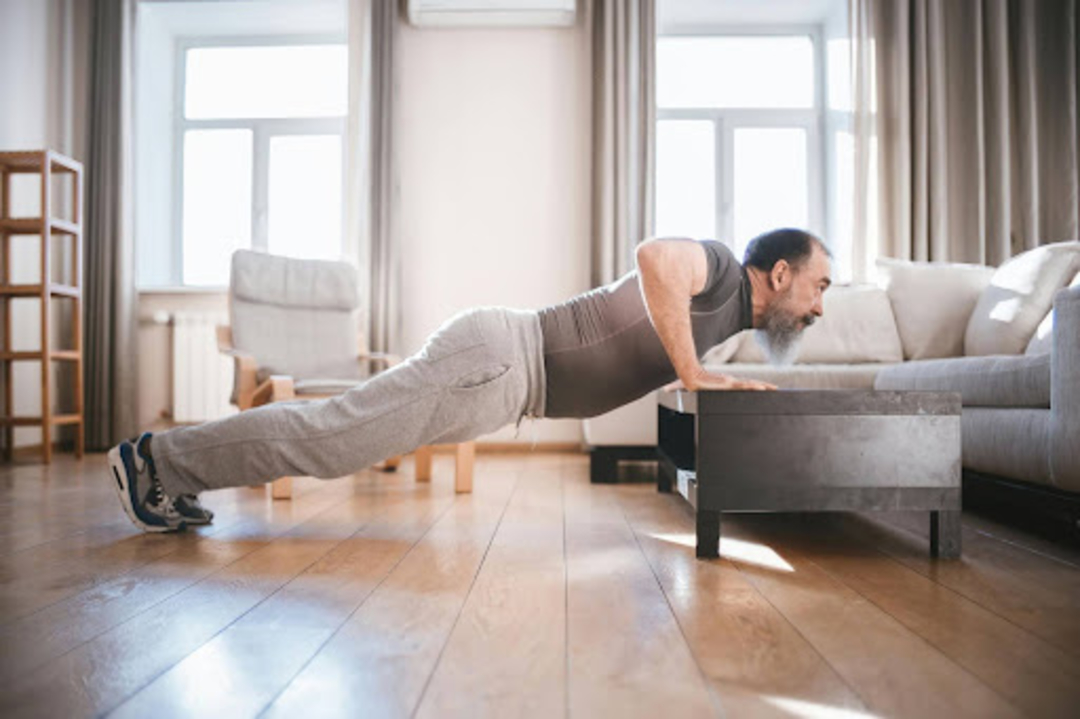
The push-up is a classic chest exercise you can do just about anywhere since it only requires your bodyweight. The incline variation is beginner-friendly because you can adjust the angle to change the intensity.
How to do an incline pushup:
Use a sturdy, stationary object like a countertop, weight bench, or step to create the incline.
Place your hands slightly wider than shoulder-width apart on the edge of the incline and step back so your body forms a straight line from shoulders to heels.
Keeping your body straight, bend your elbows to lower your chest with control to the edge of the incline.
Pause, press back to the starting position, and repeat.
4. Close-grip dumbbell press
Similar to the chest press, this exercise targets the triceps and deltoids while engaging the chest.
How to do a close-grip dumbbell press:
Lie on your back on the floor or a bench, with knees bent and feet flat.
Hold dumbbells aligned with the midline of your chest and touching, or close to touching, with palms facing away.
Keeping the dumbbells together, press straight up with control.
Pause, lower with control, and repeat.
5. Shoulder-tap plank
While the plank is typically considered a core exercise, the shoulder-tap variation adds a dynamic element that also engages the chest muscles.
How to do a shoulder-tap plank:
Start in a high plank position with feet about hip-width apart for stability.
Brace your core and chest muscles to minimize tipping to the side.
Lift your right hand, tap your left shoulder, and return your hand to the starting position.
Repeat with your left hand.
Tips for progressing safely with chest workouts
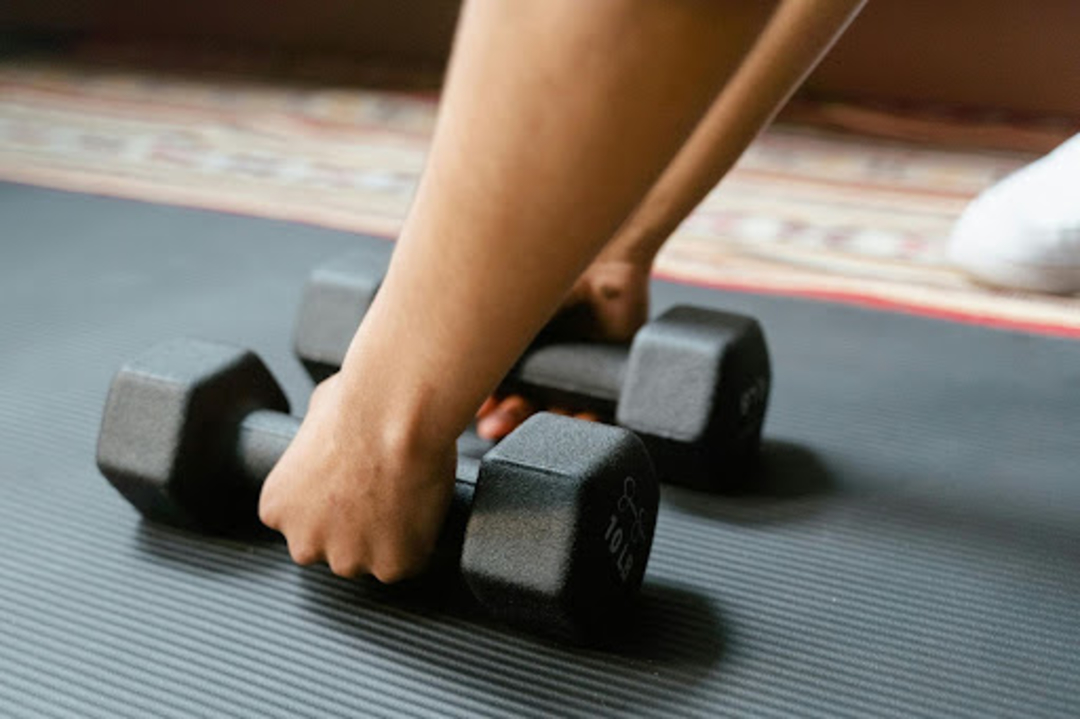
Progressing safely with chest workouts means balancing preparation, challenge, and recovery to maximize results while minimizing risk of injury. Use these tips to stay safe:
Warm up: A proper warmup is important for preventing injuries, prepping your body for the hard work you’re about to do, and improving performance during your workout. An example warm-up might include five minutes of light, full-body cardio, such as rowing, to get your blood flowing, followed by some dynamic movements like arm circles. You should also include a warm-up set with a light weight before your first strength exercise.
Progressive overload: This is a fundamental principle of exercise that, when executed properly, pushes you along at a consistent pace to make long term gains. Progressive overload is gradually increasing the stress on your muscles so you don’t plateau. This can look like more reps or sets, reduced recovery between sets, or using techniques like supersets.
Recovery: The time in between workouts is when your muscles repair and rebuild, leading to more strength. So, adequate recovery between workouts is critical. Beginners should build about 48 hours of rest between workouts exercising the same muscle groups.
More ways to train
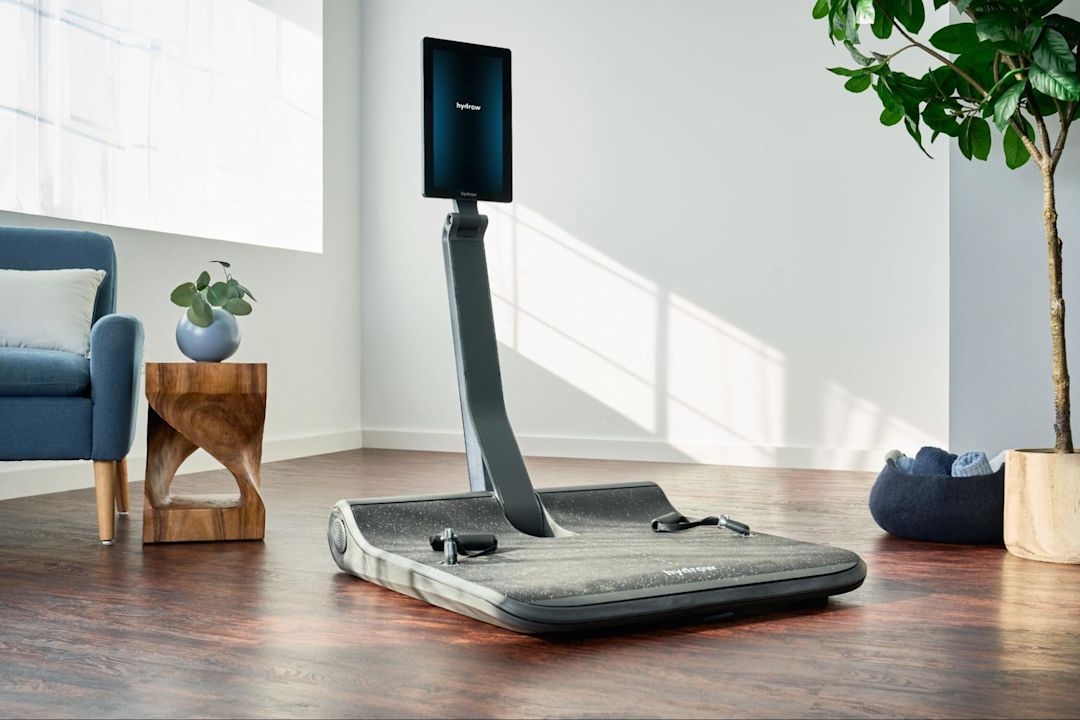
LYQUID guides you through hundreds of moves to strengthen your upper body, lower body, and core.
Beginner chest workout FAQs
Still looking for more information? These common questions address how to train your chest effectively, safely, and for the best results:
How often should I do chest workouts?
As a beginner, a full-body workout including chest exercises can be done 2–3 times a week. Other options include splitting your workouts into smaller, bodypart sessions. If you choose to do bodypart workouts, remember to get enough recovery time.
Do I need gym equipment to build chest strength?
Definitely not! Bodyweight workouts can be very challenging, and progression can be accomplished by increasing reps or sets, changing the angle of the exercise, or completing exercises as a circuit to boost the intensity.
If you exercise at home and want more resistance, bands, dumbbells, and kettlebells can be added to a home gym inexpensively.
How long until I see results with chest workouts?
Beginners tend to see results more quickly than more experienced exercisers. You can expect to see changes in as little as four weeks, particularly with focused chest workouts of 3–5 chest exercises. If you’re exercising your chest as part of a larger full-body workout, it may take a few more weeks to see chest changes.
Should I train my chest alone or in a push/pull split?
Ultimately, the best workout plan is going to be the one you stick with and enjoy. That being said, if you have the time in your schedule to focus solely on your chest muscles, go for it because you’ll see gains faster. However, a push/pull split routine is more time efficient and you can still make quick progress by working supporting muscle groups along with your chest muscles.
Get started with chest workouts with LYQUID
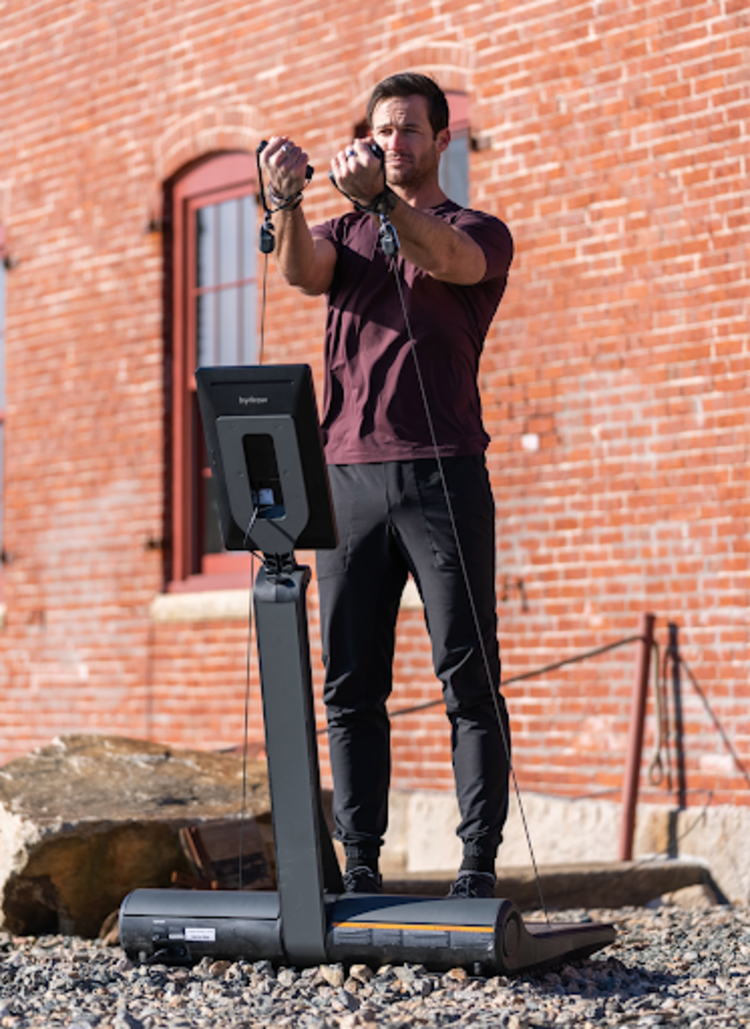
Training your chest muscles doesn’t have to be difficult, even if you're a beginner. Proceed safely with a structured plan and you’ll see results in no time.
If you’re ready to keep building strength, LYQUID makes it easy to train your chest with confidence. LYQUID uses smooth, adaptive resistance and guided workouts to help you perform exercises like chest presses, flys, and push variations with proper form and control.
With LYQUID’s expert-led programs and coaching, you can build strength safely, progress at your own pace, and get more from every rep—all from one compact strength platform.
Explore chest workouts on LYQUID and start building stronger pecs today!
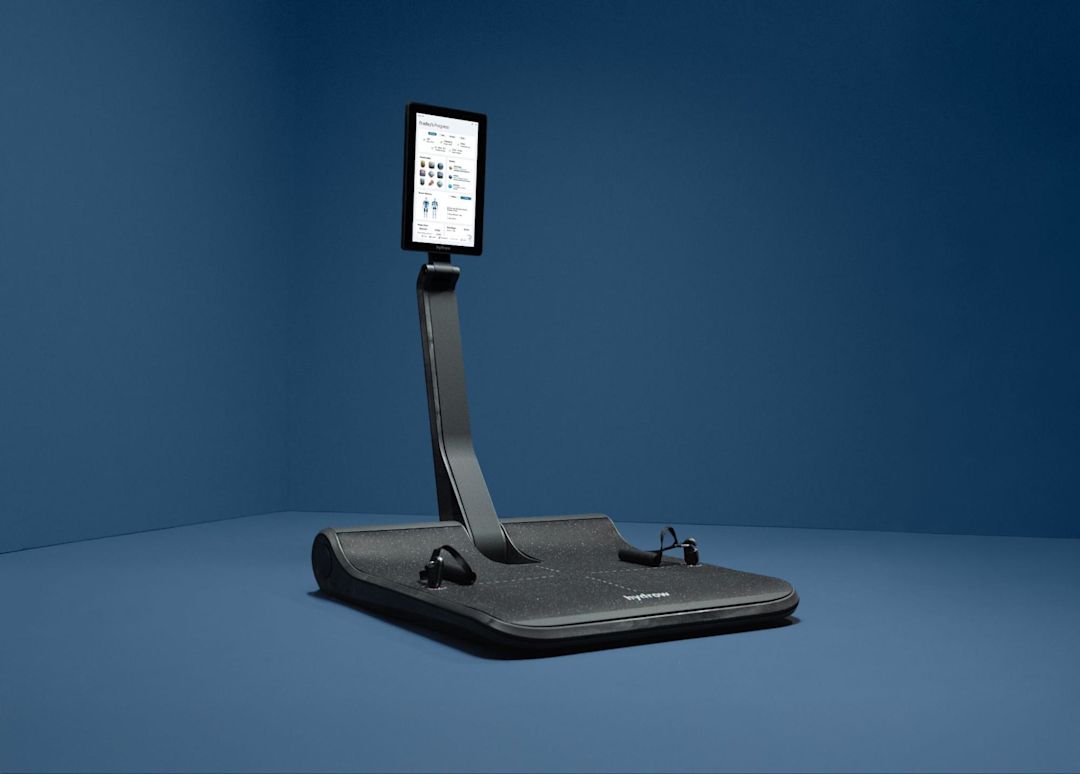
Bring LYQUID home
Preorder now and be ready to go when LYQUID is here.